← Back to MAKESTEAD

Episode 01 · The built world

How are underwater tunnels built without flooding?

How do you build a dry passage beneath a body of water? The answer begins with two very different ways of building a tunnel.

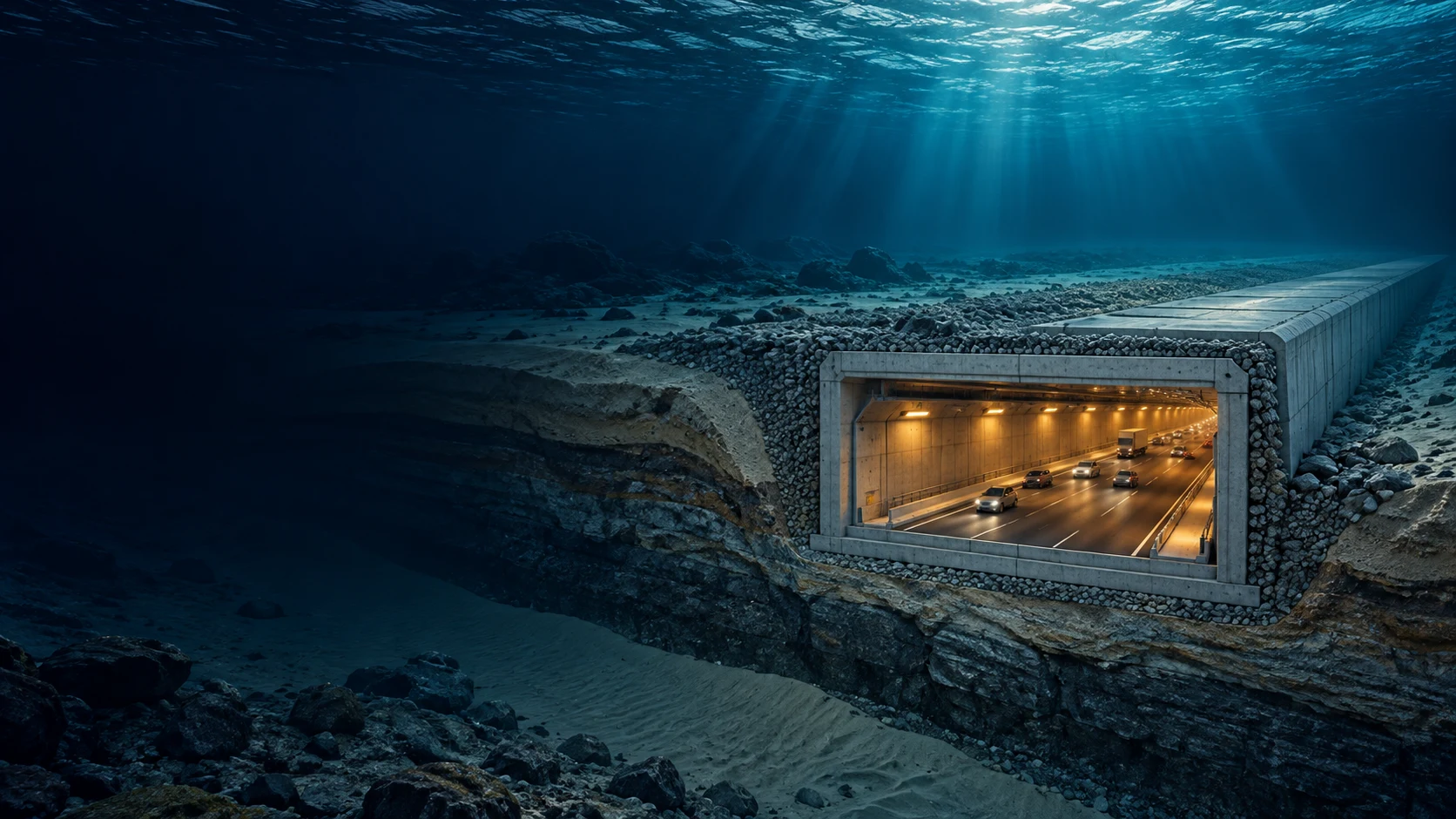
AI-generated cutaway illustration of a dry tunnel beneath the ocean.
MAKESTEAD · Episode 01

Watch the full episode

Watch on YouTube ↗ (opens in a new tab)

AI-generated conceptual illustration. Watch the full episode, then explore the explanation and sources below.

Subscribe on YouTube ↗ (opens in a new tab)

Inside the engineering

One destination. Two methods.

01 · Bored tunnels

Through the ground below.

A bored tunnel passes through ground beneath the seabed. The Channel Tunnel is an example: its route runs below the seabed, rather than resting directly on it. Tunnel linings and water-management systems help maintain a usable passage.

02 · Immersed tunnels

Built on land. Joined underwater.

Large tunnel elements are made on land, temporarily sealed at both ends, floated out and lowered into a prepared trench. The elements are then connected to form a continuous tunnel.

What happens at the connection?

For an immersed-tunnel connection, water is pumped from the sealed space between adjacent end bulkheads. The resulting pressure difference helps press the new element against the previous one and compress the joint seal. The temporary bulkheads are removed after the connection is secured.

Go to the source

Explore the engineering further.

Official references for the concepts explained on this page.

  1. Getlink — The Channel Tunnel ↗

    How the Channel Tunnel runs beneath the seabed.

  2. Femern — Building the tunnel ↗

    Producing, immersing and connecting tunnel elements.

  3. ITA-AITES — Immersed tunnels ↗

    An overview of the immersed-tunnel construction method.

Source links open in a new tab.

Have a question or correction?

Help us keep the explanation clear and accurate. Contact MAKESTEAD ↗