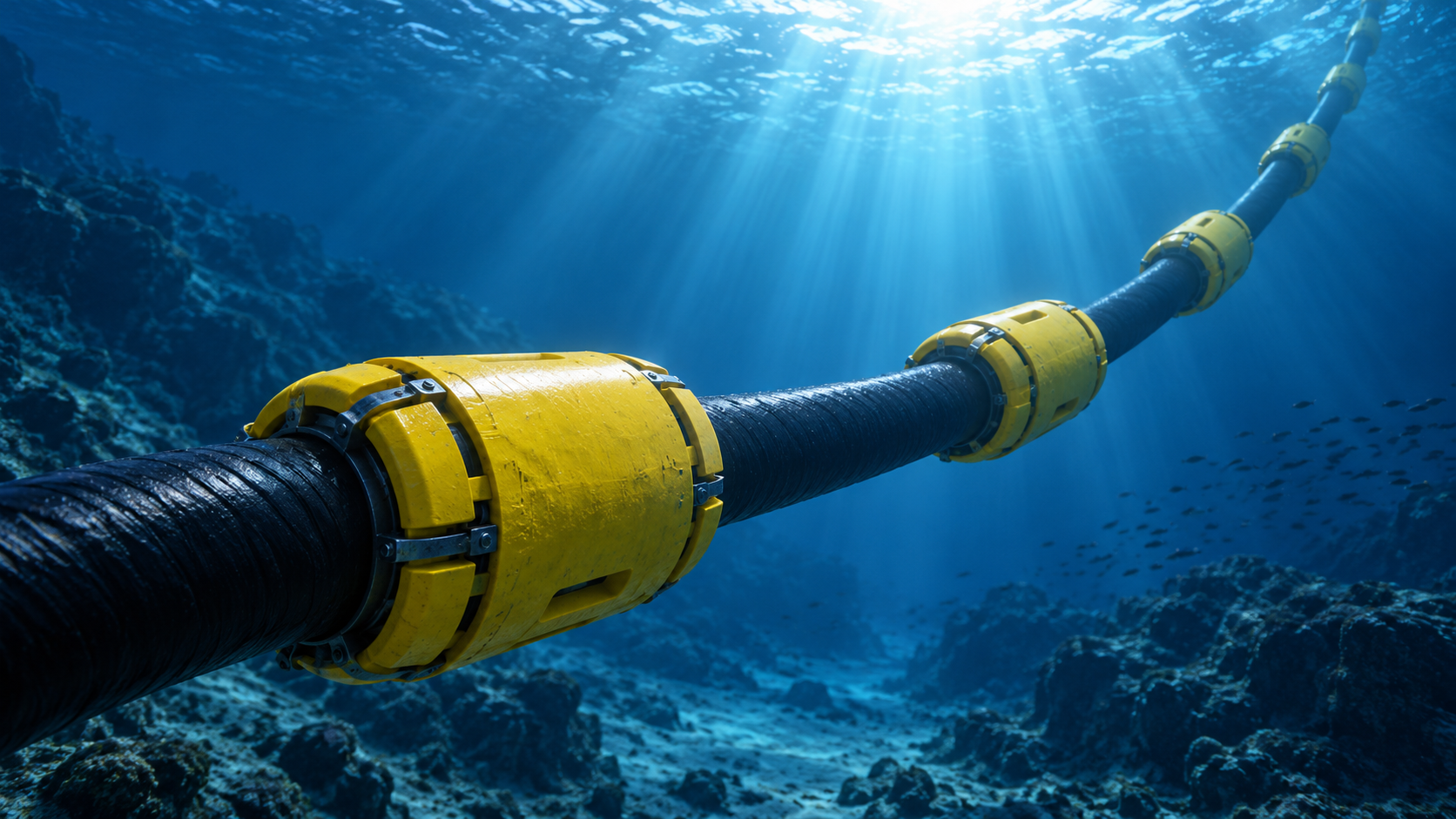
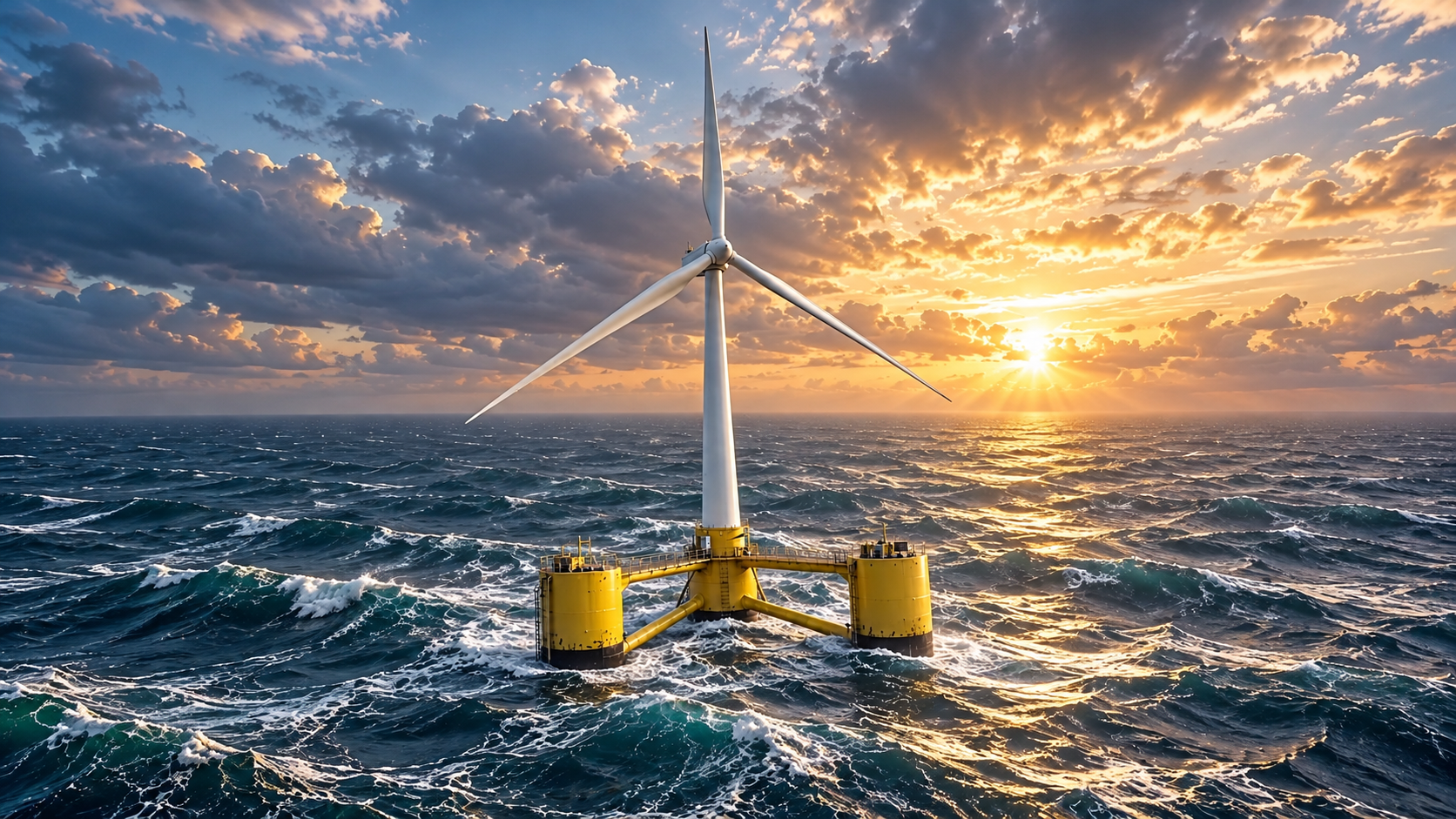
A dynamic cable accommodates movement through its geometry and mechanical design. In a lazy-wave arrangement, buoyancy modules support part of the suspended cable and create an elevated curve. The shape can change as the platform moves, helping manage loads and bending. The cable does not simply stretch like a rubber band. Sources 1–2
AI-generated illustration of cable buoyancy modules; not a construction drawing.
Inside the episode
A curve with a purpose.
01 · Geometry
Support part of the cable.
Distributed buoyancy modules offset part of the cable’s submerged weight. The resulting lazy-wave shape helps accommodate motion between the floating structure and the seabed. Other cable arrangements are also possible. Sources 1–2
02 · Bend protection
Spread the bend.
A bend stiffener adds a gradual change in stiffness near a rigid connection, helping prevent excessive local curvature. Its shape and properties must match the cable and expected loads. Source 3
03 · Fatigue
Design for repeated movement.
Repeated bending and tension can accumulate fatigue damage. Engineers assess the cable together with platform motion and environmental loads, then use qualification and testing to evaluate its performance. Source 2
What keeps the connection working?
Does the electrical cable anchor the turbine?
No. Mooring lines provide station keeping. The power cable carries electricity and must be designed to accommodate the movement allowed by the floating system.
Is every floating wind cable a lazy wave?
No. The suitable configuration depends on water depth, platform movement, cable properties, seabed conditions and installation requirements.
Can buoyancy modules prevent every failure?
No. They manage weight and shape, but the complete system still needs electrical insulation, mechanical protection, fatigue assessment and appropriate inspection.